


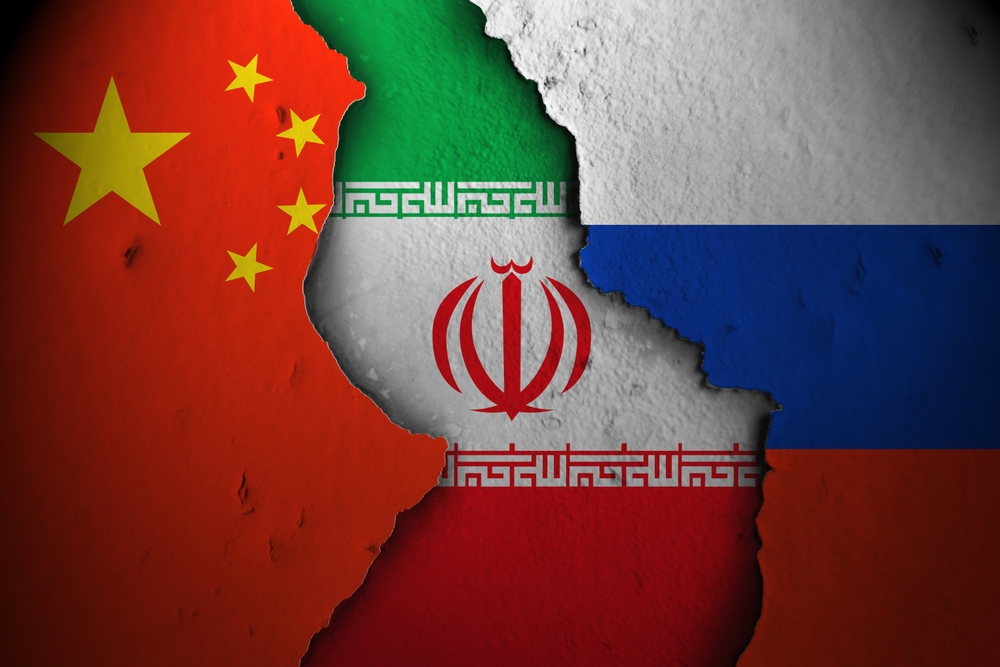
The fragile balance surrounding the Strait of Hormuz entered a new phase Wednesday as diplomatic activity intensified between China and Iran while the United States signaled a temporary pause in its maritime effort in the region. The developments come amid ongoing tensions tied to Iran’s nuclear program, disrupted global shipping routes, and fears of a wider regional conflict affecting energy markets worldwide.
Beijing Emerges as a Key Diplomatic Player
Iranian Foreign Minister Abbas Araghchi met with Chinese Foreign Minister Wang Yi in Beijing on Wednesday, according to China’s state-run Xinhua News Agency. The meeting marked Araghchi’s first visit to China since the war began and underscored Beijing’s growing role in the crisis.
China maintains strong economic and political ties with Tehran, giving it unique leverage at a time when the United States is seeking diplomatic pressure on Iran to ease tensions in the Strait of Hormuz.
Earlier in Washington, U.S. Secretary of State Marco Rubio expressed hope that China would encourage Iran to reopen the critical waterway and reduce pressure on international trade routes.
Trump Pauses Maritime Operation While Maintaining Pressure
U.S. President Donald Trump announced Tuesday evening that the United States would temporarily pause its operation aimed at guiding stranded commercial vessels out of the Strait of Hormuz.
The move is intended to create space for negotiations aimed at ending the conflict with Iran. However, Trump clarified that the U.S. naval blockade on Iranian ports would remain active.
The blockade, which has been in place since April 13, has significantly limited Iran’s oil exports and added pressure to the country’s struggling economy.
Despite the pause, American officials insisted that the nearly month-old ceasefire remains intact.
Strait of Hormuz Remains the Center of Global Anxiety
Iran’s effective closure of the Strait of Hormuz has severely disrupted one of the world’s most important energy corridors. Before the war, massive volumes of oil, natural gas, fertilizer, and petroleum products moved through the narrow passage daily.
The disruption has triggered soaring fuel prices and shaken confidence in global markets.
Breaking Iran’s control over the strait has become one of Washington’s central objectives, especially as Trump continues pushing Tehran to significantly scale back its disputed nuclear program.
Rubio Pushes for Peace Through Negotiation
Speaking at a White House briefing before Trump’s announcement, Rubio emphasized that diplomatic resolution remains Washington’s preferred outcome.
“We would prefer the path of peace,” Rubio said.
Rubio described the U.S. operation in the strait as defensive and humanitarian in nature, focused on helping trapped civilian sailors and commercial vessels.
“They’re sitting ducks, they’re isolated, they’re starving, they’re vulnerable,” Rubio said. “At least 10 sailors have already died as a result.”
According to U.S. officials, American forces recently opened a maritime lane through the strait and sank six small Iranian boats accused of threatening commercial ships.
Still, only two merchant vessels have successfully passed through the U.S.-guarded route so far, while hundreds remain stranded in the Persian Gulf.
Tehran Rejects Washington’s Narrative
Iranian officials argued that the renewed U.S. activity in the strait violates the ceasefire agreement.
Iran’s parliament speaker and chief negotiator, Mohammad Bagher Qalibaf, warned that Tehran had not yet fully responded to American actions.
“We know full well that the continuation of the status quo is intolerable for America; while we have not even begun yet,” Qalibaf said in a post on X.
His remarks suggested Iran may still escalate its response despite indirect negotiations reportedly continuing through Pakistan.
Iran also disputed Washington’s claim that six Iranian boats had been sunk. An Iranian military commander instead claimed that two civilian cargo boats were struck Monday, killing five civilians, according to Iranian state television.
Massive U.S. Military Presence Continues
Gen. Dan Caine, chairman of the Joint Chiefs of Staff, said more than 100 U.S. military aircraft are currently patrolling the skies over the Strait of Hormuz.
Caine described Tuesday as a “quieter” day and stated that recent Iranian actions had not crossed the threshold of “major combat operations.”
Defense Secretary Pete Hegseth echoed those remarks, emphasizing that the ceasefire remains technically in effect.
Rubio also stressed that American forces were not seeking further escalation.
“There’s no shooting unless we’re shot at first, OK?” Rubio said. “We’re not attacking them.”
Shipping Giants Remain Unwilling to Risk Passage
Even with the newly established U.S. route, global shipping companies remain deeply cautious about entering the strait.
Maersk confirmed that one U.S.-flagged vessel operating under its management safely exited the waterway Monday with American military assistance.
However, German shipping giant Hapag-Lloyd said its assessment had not changed and that passage through the strait remains too dangerous.
Military experts have also warned that reopening the narrow 21-mile-wide waterway would be extremely difficult, even with military protection.
Iran continues requiring vessels to use its northern route near the Iranian coastline, where ships are vetted by Iran’s Revolutionary Guard and sometimes required to pay fees before transit.
The alternative U.S.-approved route passes through the territorial waters of Oman to the south.
UAE Faces Growing Security Threats
The United Arab Emirates has increasingly become a target of regional instability tied to the conflict.
The UAE Defense Ministry announced Tuesday that it intercepted another Iranian drone and missile attack, though no casualties or major damage were reported.
A day earlier, Emirati defenses reportedly engaged 15 missiles and four drones launched from Iran. One drone strike ignited a fire at a major oil facility and injured three Indian nationals.
The British military also reported multiple maritime incidents near the UAE, including two cargo ships catching fire Monday and another vessel being struck by an “unknown projectile” Tuesday.
Iran denied responsibility for the attacks.
Iranian military spokesman Ebrahim Zolfaghari stated on state television that Tehran had not targeted the UAE “in recent days.”
A Fragile Pause With Global Consequences
While Washington and Tehran continue avoiding full-scale confrontation, tensions in the Strait of Hormuz remain dangerously high. China’s involvement may provide a new diplomatic pathway, but uncertainty continues to dominate energy markets, international shipping, and regional security calculations.
With only limited commercial traffic moving through the strait and military forces still heavily deployed across the Gulf, the coming days could determine whether the crisis moves toward negotiation or slides back toward open conflict.
