


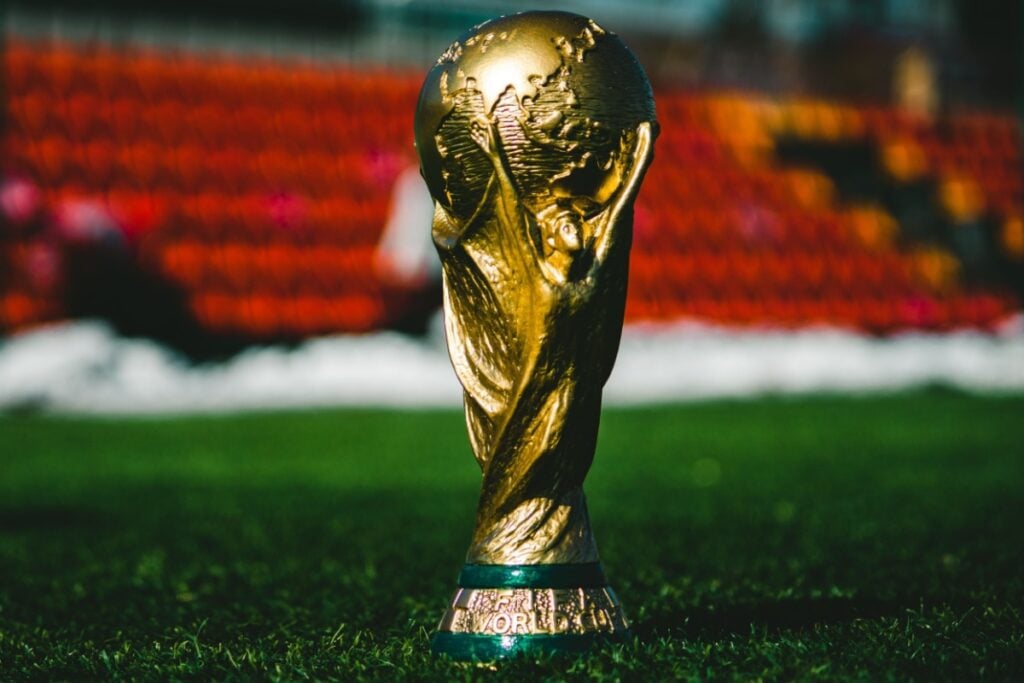
A senior figure within the German soccer federation (DFB) has called for a discussion of whether to boycott the 2026 FIFA World Cup in response to actions by U.S. President Donald Trump. Oke Göttlich, an executive committee member at the DFB, said the issue should be taken up seriously and publicly rather than dismissed as unrealistic.
Göttlich, who is also president of Bundesliga club St. Pauli and one of the federation’s 10 vice presidents, made the comments in an interview with the German newspaper Hamburger Morgenpost. He argued that the political environment surrounding the tournament hosts is relevant to football’s governing bodies and their stated commitments to values.
In his remarks, Göttlich pointed to the history of major sporting boycotts and asked what threshold must be crossed before national federations treat political developments as incompatible with participation. He specifically referenced the 1980s-era boycotts as a point of comparison and said the present-day risks, in his view, warrant renewed debate rather than silence.
Trump Policies And The World Cup Setting
The United States is set to co-host the 2026 World Cup alongside Canada and Mexico, with the tournament scheduled for June 11 to July 19. The expanded event is expected to draw large crowds across multiple cities, making cross-border travel and visa access central to the fan experience.
Göttlich’s comments tied the boycott question to broader tensions between Washington and European capitals. In the account he referenced, Trump has heightened friction in Europe through a takeover bid for Greenland, a semiautonomous territory of Denmark, a NATO member, and through threats to impose tariffs on eight European countries that opposed the move. Those disputes have fueled warnings from allies about a deeper rupture with the United States and potential strain on the NATO alliance.
The debate is also unfolding amid practical concerns surrounding the tournament. The same report noted worries among supporters about high ticket prices, while travel restrictions introduced by the Trump administration were described as limiting attendance for fans from some participating nations.
Likely Resistance And Qatar Comparisons
Any push to take boycott discussions further would likely face resistance at the top of football governance. The report said Göttlich is expected to meet opposition from DFB president Bernd Neuendorf as well as FIFA president Gianni Infantino, both of whom have previously emphasized separating tournament operations from political disputes.
Göttlich framed that separation as inconsistent with recent history. He contrasted current caution about politicizing the 2026 event with the intense political scrutiny that surrounded the World Cup in Qatar, when debates over human rights and governance dominated public discussion in parts of Europe, including Germany. He questioned how football could treat one host as a political issue while portraying another as off-limits for similar debate.
The report also noted that Germany underperformed at the tournament in Qatar, and that the national team coach who took charge afterwards said he wanted no more political distractions. Against that backdrop, calls to reopen a values-based debate risk reigniting divisions inside German football over how much activism is appropriate during major international competitions.
St. Pauli Identity And Player Impact
Göttlich’s stance is closely tied to St. Pauli’s identity, a club widely known in Germany for blending sport and politics and for its left-leaning culture. Based in Hamburg near the city’s red-light district, the club is associated with a supporter scene that helped popularize the skull-and-crossbones symbol now strongly linked to St. Pauli.
Within the interview, Göttlich rejected the idea that boycott talk should be avoided out of concern for professional footballers whose careers depend on major tournaments. The report said he dismissed suggestions that such a stance would unfairly harm St. Pauli’s national-team players, including Australia’s Jackson Irvine and Connor Metcalfe, and Japan’s Joel Chima Fujita.
He argued that the interests of elite athletes should not automatically outweigh broader ethical or security concerns linked to the tournament’s political context. That framing places the DFB’s leadership under pressure to clarify whether it views boycott discussions as a legitimate tool, a symbolic gesture, or an unacceptable escalation ahead of the sport’s largest event.
