


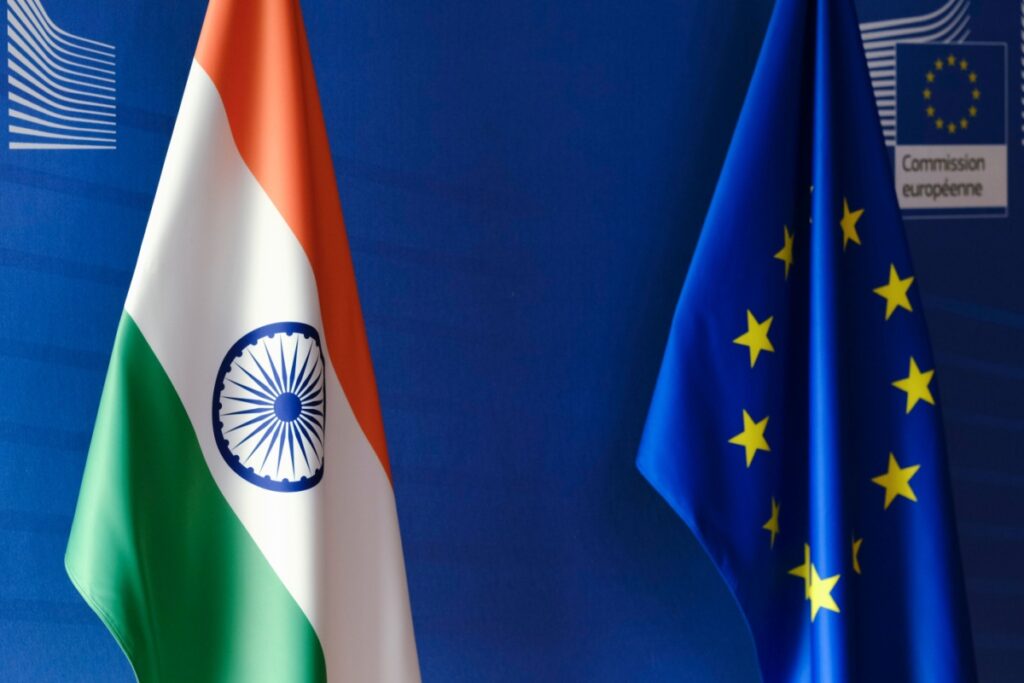
India and the European Union said on Tuesday, Jan. 27, 2026, that they had reached a wide-ranging free trade agreement aimed at deepening economic and strategic ties after nearly two decades of negotiations. The pact, described by European Commission President Ursula von der Leyen as the “mother of all deals,” is expected to take months to enter into force as the text undergoes legal review and ratification.
The agreement links India with the EU’s 27 member states and is designed to lower barriers across a broad set of goods, including textiles, medicines, automobiles, and wine. Officials framed the deal as economically significant and politically timely, as major economies adjust to shifting trade policies and rising tariff disputes.
A Deal With Strategic Timing
The announcement came as both India and the EU face pressure from U.S. trade measures, with officials and analysts describing an intensifying push to diversify partners and reduce exposure to sudden tariff changes. Indian Prime Minister Narendra Modi, speaking alongside von der Leyen and European Council President António Costa in New Delhi, argued that closer India-EU ties could reinforce global stability “at a time of turmoil in the global order.”
Von der Leyen, in public remarks and a post on X, presented the agreement as a strategic choice by “two giants” opting for cooperation and “a true win-win fashion,” while also casting it as a signal that collaboration remains a practical response to global challenges.
Beyond trade, the two sides also outlined a framework for deeper defense and security cooperation, alongside a separate arrangement intended to ease mobility for skilled workers and students, indicating that the partnership is meant to extend beyond tariff cuts.
Tariff Cuts Across Most Traded Goods
According to statements cited by officials, India is expected to reduce or eliminate tariffs for 96.6% of EU exports, while the EU will phase in reductions that ultimately cover nearly 99% of India’s shipments by trade value. Formal signing could come later in 2026, following legal scrubbing and European Parliament approval, with India’s trade minister Piyush Goyal saying he expected the deal to take effect by the end of the year.
The sectoral benefits described by officials span some of the most politically sensitive categories on both sides. India’s export-focused industries expected to gain include textiles, apparel, engineering goods, and products such as leather, handicrafts, footwear, and marine items. For the EU, officials highlighted improved access for wine, automobiles, chemicals, and pharmaceuticals.
A quota-based approach was agreed for automobiles, wines, and whisky, intended to soften the impact of sharp tariff reductions while still lowering duties that have long constrained trade in those categories.
Autos, Wine, and Exclusions That Shaped the Final Text
Some of the most specific tariff changes detailed by the European Commission relate to cars and alcohol—areas where India has traditionally maintained high levels of protection. Under the outline described by officials, tariffs on EU-made cars are set to fall from 110% to as low as 10%, while tariffs on car parts would be eliminated after five to 10 years. The Commission also said tariffs of up to 44% on machinery, 22% on chemicals, and 11% on pharmaceuticals would be mostly removed.
For European wine exporters, the deal is expected to cut India’s tariffs on premium wines from 150% to 20%, a change that could materially reshape market access in an area where duties have long been a point of contention.
At the same time, negotiators carved out politically sensitive products. India excluded dairy items such as milk and cheese, along with cereals, citing domestic sensitivities. On the EU side, officials said the bloc would not grant concessional tariffs for Indian sugar, meat, poultry, and beef products.
Trade volumes underscore why both sides pursued the agreement despite the complexity. Officials said trade between India and the EU stood at $136.5 billion in 2024–2025, with a goal of reaching about $200 billion by 2030. Analyst commentary accompanying the announcement described the deal as an attempt to establish a more predictable corridor for commerce at a moment of wider fragmentation in the global trading system.
