


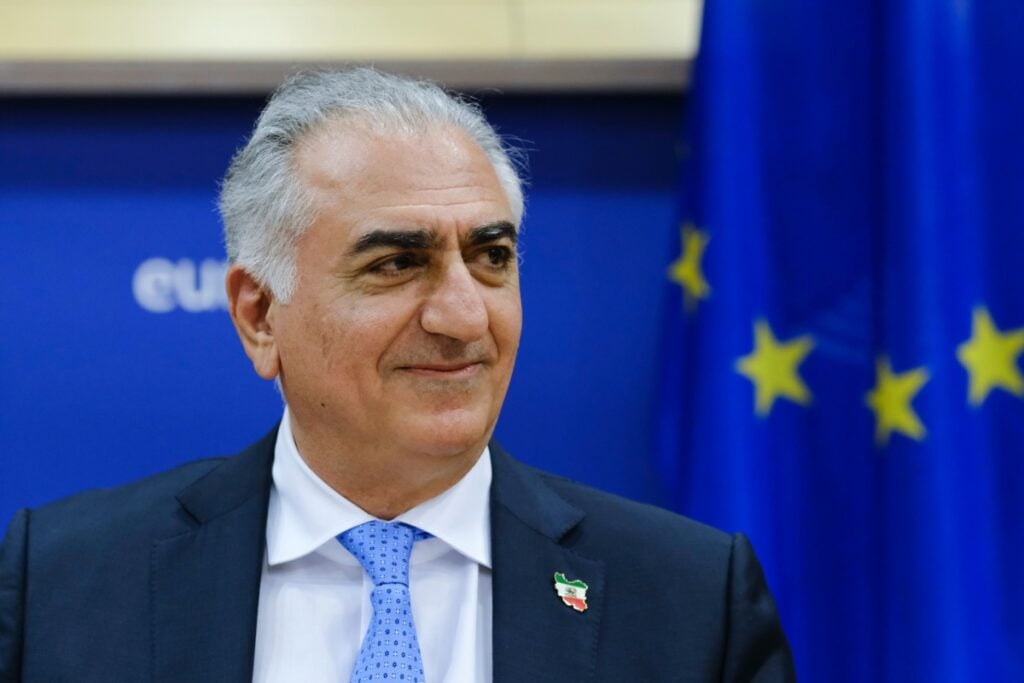
Iran’s government cut the country off from the internet and blocked international telephone calls on Thursday night, as protests intensified after a call for mass demonstrations by exiled crown prince Reza Pahlavi, witnesses said. Residents in multiple neighborhoods of Tehran reported hearing chants from homes and seeing people gather in the streets as the protest stretched into Friday morning.
Internet-monitoring and security firms said the disruption appeared to be deliberate state interference. Cloudflare and the advocacy group NetBlocks separately reported the outage. From outside the country, callers also encountered failures: attempts to connect from Dubai to Iranian landlines and mobile numbers failed, according to accounts cited in the reporting. Similar shutdowns in the past have coincided with tougher security responses, adding to concerns about what might follow.
Protests Spread Beyond Major Cities
The unrest has been unfolding across both cities and rural towns, with signs of wider participation in economic hubs. Markets and bazaars in some areas closed in apparent support of protesters, underscoring the breadth of disruption as demonstrations continued through Thursday. The U.S.-based Human Rights Activists News Agency (HRANA) estimated that violence linked to the protests had killed at least 42 people and that more than 2,270 others had been detained at that point, though independent verification has been difficult amid the communications cutoff.
The protest movement has also remained largely leaderless, a factor analysts say has shaped prior waves of unrest. Nate Swanson of the Atlantic Council argued that the absence of a widely accepted alternative leadership has historically constrained Iran’s opposition, while also noting that Iran’s security apparatus has targeted potential leaders through arrests, pressure, and exile. Against that backdrop, it was unclear whether Pahlavi’s call would alter the trajectory of the protests.
Chants, Warnings, And Reports Of Violence
Pahlavi called for demonstrations at 8 p.m. local time (1630 GMT) on Thursday and Friday, and witnesses described neighborhoods across Tehran erupting with chants after the hour arrived. Slogans included “Death to the dictator!” and “Death to the Islamic Republic!” Some protesters also voiced support for the former monarchy, shouting: “This is the last battle! Pahlavi will return!” Witnesses described large crowds in the streets shortly before communications went dark.
In remarks carried in the report, Pahlavi said authorities had “cut all lines of communication,” including internet access and landlines, and warned that satellite signals could also be jammed. He urged European leaders to join U.S. President Donald Trump in holding Iran’s leadership accountable and called for the use of “technical, financial, and diplomatic resources” to restore communications so protests could be seen and heard abroad. The report also noted that Pahlavi’s relationship to Israel has drawn criticism, particularly after a 12-day Israel-Iran war in June, complicating how his appeal is received.
Iranian officials did not publicly acknowledge the overall scale of the protests in the coverage, but state-aligned outlets and agencies reported attacks on security personnel in several locations. Iran’s judiciary-linked Mizan news agency reported a police colonel died from stab wounds outside Tehran, while the semiofficial Fars news agency said gunmen killed two security force members and wounded 30 others in a shooting in Lordegan in Chaharmahal and Bakhtiari province. Iranian state television also cited a deputy governor in Khorasan Razavi province as saying an attack at a police station in Chenaran killed five people, and the Revolutionary Guard reported two of its members were killed in Kermanshah.
Economic Pressure And International Reactions
The protests began against the backdrop of deep economic strain. The report linked the unrest to a collapsing currency and rising pressure after tighter sanctions and the fallout from the 12-day war, noting that the rial reportedly slid to around 1.4 million per US-Dollar in December.
International attention has increased as the crackdown threat looms. Trump reiterated warnings in an interview with radio host Hugh Hewitt, saying Iran would face severe consequences if it “violently kills peaceful protesters,” and he declined to say he would meet with Pahlavi, arguing it was too early to determine “who emerges.” The report also highlighted the continued imprisonment of Nobel Peace Prize laureate Narges Mohammadi, arrested in December, and quoted her son Ali Rahmani describing the protests that began on Dec. 28, 2025 as part of a pattern of nationwide uprisings with demands for an end to Iran’s current system of rule.
In developments after the AP report, other coverage described rising international pressure tied to the crackdown, including additional U.S. sanctions announced on Jan. 15, 2026 targeting Iranian officials and entities over repression of protesters.
