


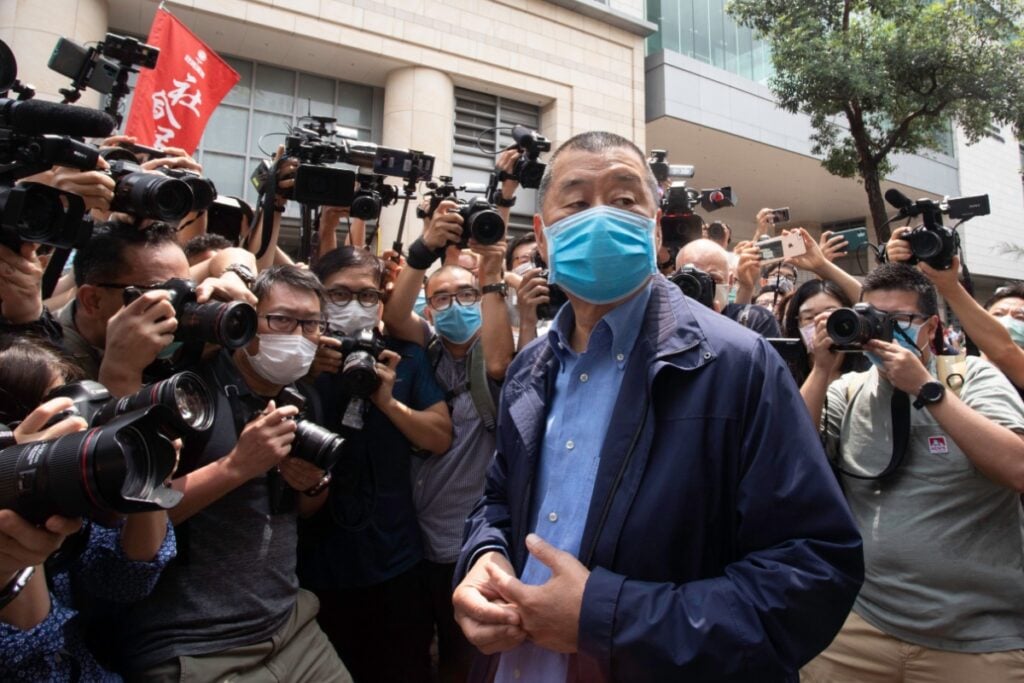
A Hong Kong court is set to sentence Jimmy Lai, a 78-year-old pro-democracy publisher and former media tycoon, on Monday, Feb. 9, 2026, after his conviction under a Beijing-imposed national security framework. The city’s judiciary listed the hearing for 10 a.m. local time, according to the court schedule referenced in local reporting.
Lai, the founder of the now-defunct newspaper Apple Daily, faces a potential life sentence, making the case one of the most closely watched prosecutions tied to the post-2019 security crackdown.
Charges Center on “Foreign Collusion” and Sedition Claims
Prosecutors alleged that Lai and others used articles, commentary, and public advocacy associated with Apple Daily to encourage foreign governments to take hostile steps against Hong Kong and China, including sanctions and other measures. The court found him guilty of conspiracy to collude with foreign forces and conspiracy to publish seditious materials.
A major point of dispute at trial was timing: the defense argued that while Lai had previously supported sanctions, he stopped after the security law took effect. Prosecutors countered that he still sought to shape international pressure indirectly through messaging and media content. In one exchange cited in coverage, his lawyer described the remarks as “over the dim sum table,” framing them as political talk rather than criminal solicitation.
Authorities also pursued individuals connected to the broader case. Reporting described six former Apple Daily journalists and two activists as co-defendants, with several entering guilty pleas that can factor into sentencing.
A Long Trial, Wider Media Crackdown, and Prior Convictions
The proceedings became a focal point for debate over judicial independence and press freedom. An AP explainer described a 156-day trial and noted the court’s verdict ran 855 pages, underscoring how intensively the case was litigated.
The prosecution highlighted Lai’s international ties, including meetings with Mike Pompeo and Mike Pence during the height of the 2019 protest period, and alleged coordination with advocacy and political networks such as Fight for Freedom Stand with Hong Kong and the Inter-Parliamentary Alliance on China. The alliance has publicly rejected claims about Lai’s involvement, according to AP reporting.
Separately, Lai is already serving a nearly six-year prison term linked to a fraud case, and sentencing in the national security matter would add to his time in custody.
International Scrutiny and Official Pushback
The case has drawn condemnation and appeals from abroad. Donald Trump has publicly said he raised Lai’s situation with Chinese leaders, and the British government under Keir Starmer has called for Lai’s release, noting his status as a British citizen.
Hong Kong and Beijing officials reject the suggestion that the prosecution is about suppressing journalism, arguing instead that it concerns alleged criminal conduct. Andrew Cheung, Hong Kong’s chief justice, was quoted in AP coverage warning against demands to free defendants on political grounds, saying such moves would “strike at the very heart of the rule of law itself.”
Beyond this single case, AP reporting describes a broader contraction in civic space since the security law’s introduction, including the closure of civil society groups and an increase in emigration by residents seeking to live abroad.
