


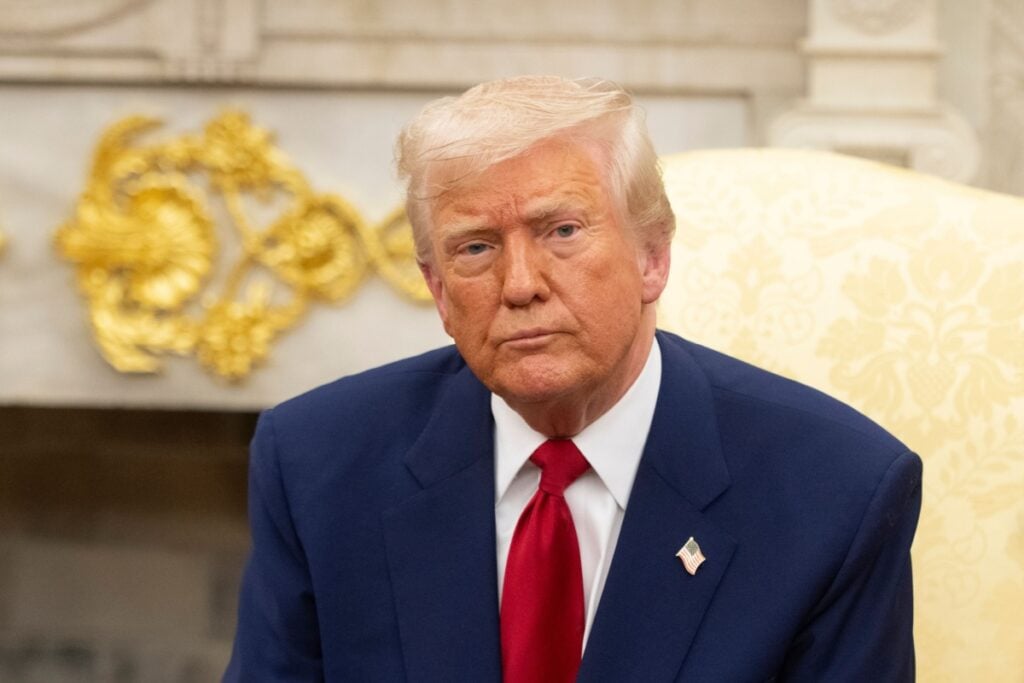
After the U.S. capture of Venezuelan strongman Nicolás Maduro, President Donald Trump cast the operation as a message that Washington will impose its priorities across the hemisphere. Maduro was soon escorted through the U.S. Drug Enforcement Administration offices in New York, a public display that capped months of rising confrontation between Washington and Caracas.
The AP report said Trump has paired the Venezuela raid with a more aggressive regional posture built on tariffs, sanctions, and military pressure. It cited actions including promoting the “Gulf of America” name, ordering boat strikes against alleged traffickers in the Caribbean, and imposing a naval blockade on Venezuelan oil exports, alongside demands related to migration enforcement, counternarcotics efforts, and strategic resources.
Trump has labeled the approach the “Donroe Doctrine,” a twist on the Monroe Doctrine. Gimena Sanchez of the Washington Office on Latin America said the administration is attempting to reshape Latin American politics in multiple ways, deepening divisions among governments.
Conservatives Cheer and Align With Trump
Several right-leaning leaders embraced Maduro’s removal as a political win and a signal of momentum for their agenda. Argentine President Javier Milei framed the episode as a showdown between defenders of democracy and supporters of a criminal dictatorship. In Ecuador, conservative President Daniel Noboa warned that movements tied to Hugo Chávez and the Bolivarian project would face continental collapse.
In Chile, where last month’s presidential election was shaped by security concerns and debate over Venezuelan migration, far-right president-elect José Antonio Kast welcomed the raid as good news for the region. The reaction reflected a broader rightward shift in some recent campaigns, where promises of tougher borders and stronger policing have moved to the center of political messaging.
Leftist Presidents Cite Sovereignty and Stability
Left-leaning presidents responded with sharp warnings, arguing the raid revived a dangerous model of U.S. intervention. Brazil’s Luiz Inácio Lula da Silva called it an “extremely dangerous precedent,” while Mexico’s Claudia Sheinbaum said it threatened regional stability. Chile’s Gabriel Boric described the operation as a violation of international law, and Colombia’s Gustavo Petro called it aggression against Venezuela’s sovereignty and Latin America.
AP described a pattern in which Trump has threatened or punished leaders who resist his demands while supporting friendly governments. Critics say that Trump’s statements about “running” Venezuela and taking control of its oil sector reinforce fears that Washington is prepared to decide political outcomes, not merely isolate an authoritarian figure.
History Resurfaces as the Next Phase Takes Shape
For many governments, the Maduro operation recalled a history of U.S. involvement in the region, from occupations in the Caribbean and Central America to Cold War-era backing of military dictatorships in South America. Those memories helped fuel protests and produced more cautious reactions even among some leaders who generally support Trump.
El Salvador’s Nayib Bukele, usually outspoken in his support for Trump, did not match the celebration voiced elsewhere, posting a meme about Maduro but offering limited comment. In Bolivia, new conservative President Rodrigo Paz said Venezuela’s way forward should be to respect the vote, pointing to a 2024 election the AP report said was widely seen as fraudulent.
Uncertainty grew after Trump indicated he would work with Vice President Delcy Rodríguez, described by AP as a Maduro loyalist, rather than the opposition that the report said prevailed in the disputed 2024 vote. Former U.S. diplomat Kevin Whitaker said the early signals suggested Washington was making decisions about Venezuela’s democratic future without anchoring them to the election result.
Maduro and his wife were expected to make a first U.S. court appearance on narco-terrorism charges that the administration cited in justifying the capture. Trump also used the moment to warn other governments, saying Cuba “looks like it’s ready to fall,” criticizing Mexico over cartels, and repeating allegations aimed at Petro. Alexander Gray of the Atlantic Council said Trump is likely to keep seeking partner governments that share his ideological outlook.
