


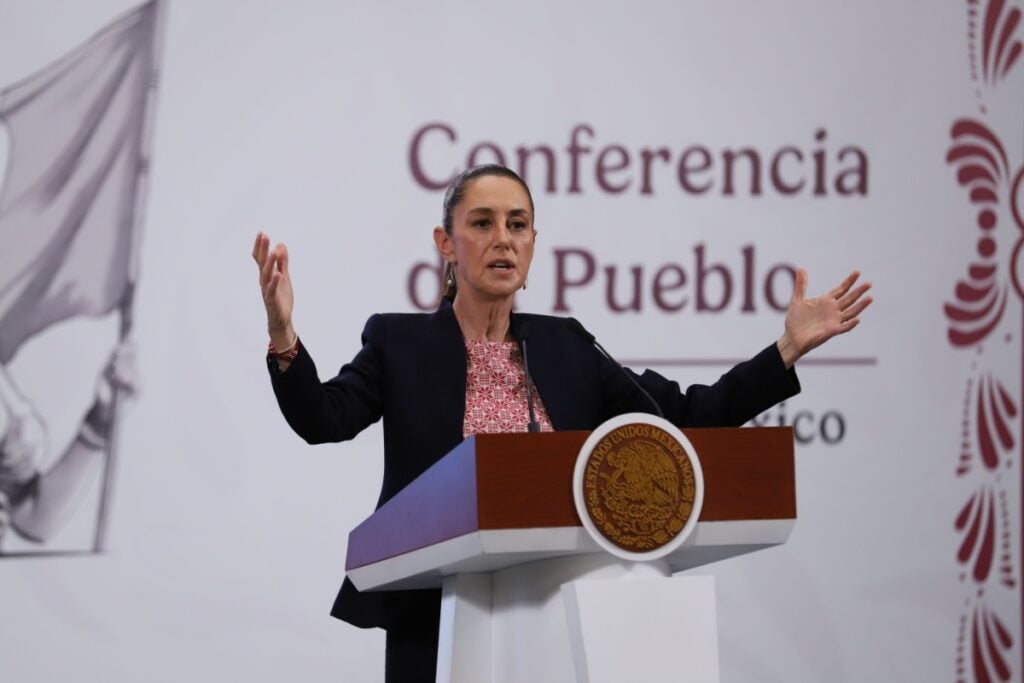
In a decisive legislative move, Mexico’s Congress has formally approved a sweeping package of tariff increases targeting imports from countries lacking free trade agreements with the nation. The measure, which was finalized by the Senate on Wednesday evening, imposes duties of up to 50% on more than 1,400 distinct product categories. The legislation had already cleared the lower chamber earlier in the week, signaling a unified front from the ruling administration. The Senate passed the bill with 76 votes in favor, five against, and 35 abstentions, a margin that underscores the political dominance of the governing Morena party, led by President Claudia Sheinbaum.
The new fiscal framework is set to take effect in January 2026. It specifically targets goods such as textiles, footwear, household appliances, automobiles, and auto parts. While the legislation applies broadly to nations without existing commercial treaties with Mexico, the primary impact will be felt by Asian economies, most notably China, as well as India, South Korea, Thailand, and Indonesia. Government officials have framed the policy as a necessary step to bolster domestic industrial production and protect Mexican manufacturers from what they describe as unfair competition. However, the timing and scope of the measures suggest they are also designed to align Mexico’s trade policy more closely with the geopolitical priorities of the United States.
Under the approved scheme, the 50% maximum tariff rate will apply to the most sensitive sectors, such as finished automobiles and steel, while other goods will see duties ranging from 5% to 35%. This marks a significant pivot from Mexico’s traditionally open trade stance, which has historically favored robust commercial ties with diverse global partners. The administration has projected that these levies will generate approximately $3.76 billion in additional revenue during the next fiscal year, funds that proponents argue will be reinvested into strengthening national supply chains.
Strategic Alignment with North American Partners
Analysts widely interpret this legislative maneuver as a strategic response to escalating pressure from Washington. As Mexico’s most critical trading partner, the United States has increasingly scrutinized the volume of Chinese goods entering the North American market through Mexican borders. The administration of U.S. President Donald Trump has frequently accused China of utilizing Mexico as a “backdoor” to circumvent U.S. tariffs, threatening to impose severe penalties on Mexican exports if the issue is not addressed.
President Claudia Sheinbaum is currently navigating a complex diplomatic landscape, seeking to shield Mexico’s export-driven economy from the threat of U.S. protectionism. By preemptively raising barriers against Chinese imports, Mexico City appears to be positioning itself favorably ahead of the upcoming review of the United States-Mexico-Canada Agreement (USMCA). This trade pact, which replaced NAFTA, is critical to the Mexican automotive and manufacturing sectors. The looming review process places immense pressure on Mexico to demonstrate that it is not facilitating the entry of Chinese components into the regional supply chain.
Economic experts, such as Oscar Ocampo from the Mexican Institute for Competitiveness, have noted that while the stated goal is domestic industrial strengthening, the realpolitik behind the decision is undeniable. Ocampo argues that the Mexican government is bending to the demands of the Trump administration to secure exemptions or reductions on U.S. tariffs that currently affect Mexican steel, aluminum, and automobiles. This strategy, however, carries economic risks. Critics warn that severing access to affordable Asian intermediate goods could disrupt local manufacturing lines, specifically in the plastics and chemicals sectors, potentially driving up inflation and reducing the competitiveness of Mexican exports in the long run.
Beijing Criticizes Protectionist Measures
The reaction from Beijing has been swift and critical. Following the announcement, China’s Ministry of Commerce issued a statement condemning the tariff hikes as unilateral and protectionist. Chinese officials warned that such measures would substantially undermine global trade interests and disrupt established supply chains. The ministry urged Mexico to correct what it termed “erroneous practices” and indicated that it would closely monitor the implementation of the new duties to assess their impact on Chinese enterprises.
The economic stakes are high for both nations. China stands as Mexico’s second-largest source of imports, with trade volumes reaching approximately $130 billion in 2024, a figure surpassed only by the United States. The symbiotic relationship has seen Chinese companies investing heavily in Mexican manufacturing facilities—a trend known as “near-shoring”—to move production closer to the U.S. market. The new tariff regime threatens to chill this investment flow and complicates the operations of Chinese firms already established in Mexico.
Despite the diplomatic friction, proponents within the Morena party, such as Senator Emmanuel Reyes, maintain that the policy is not merely a revenue-raising tool but a structural adjustment intended to prioritize general welfare and national sovereignty. By discouraging reliance on Asian imports, the government hopes to incentivize multinational corporations to source more materials locally, thereby deepening the integration of the North American trading bloc. As the implementation date approaches, industries across the automotive and retail sectors are bracing for significant price adjustments and supply chain reconfigurations.
