


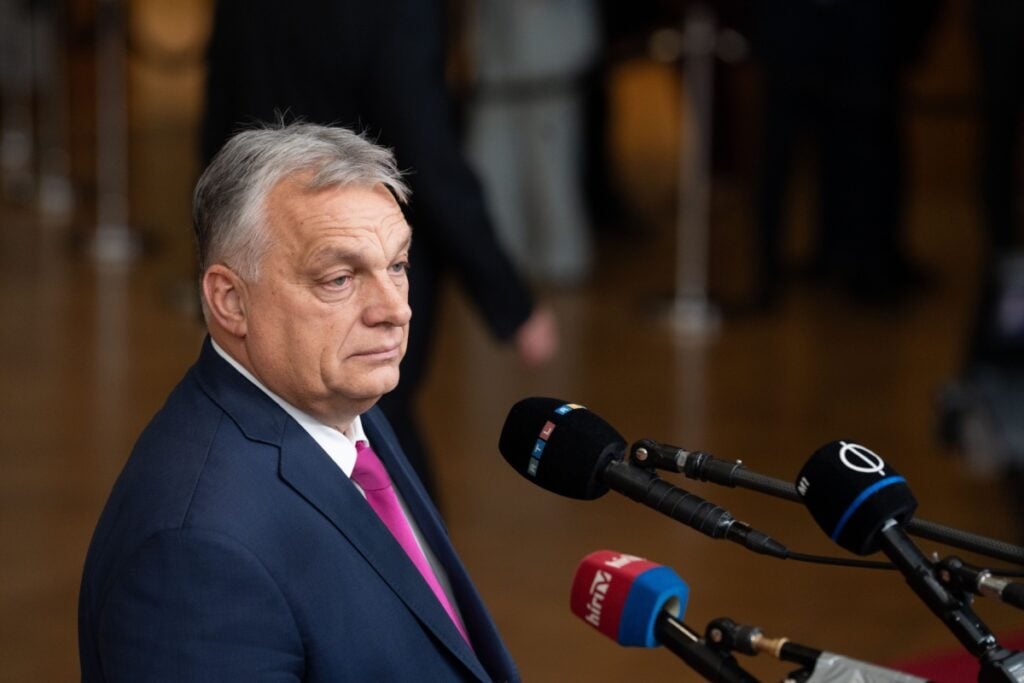
European nationalist leaders have gathered behind Hungarian Prime Minister Viktor Orbán as Hungary approaches a closely watched parliamentary election that could reshape political momentum across the continent. The vote, scheduled for April 12, 2026, is widely seen as a critical moment for both Hungary and the broader European far-right movement.
Orbán, who has governed Hungary since 2010, is considered a central figure in modern nationalist politics. His approach, often described as emphasizing strict immigration controls, national sovereignty, and socially conservative policies, has influenced similar movements in Europe and the United States.
Supporters from across Europe traveled to Budapest to attend meetings organized by the Patriots for Europe alliance, a political bloc that has grown into one of the largest factions in the European Parliament. The group includes prominent figures such as Marine Le Pen of France, Matteo Salvini of Italy, and Geert Wilders of the Netherlands. Their participation signals a coordinated effort to expand nationalist influence in European institutions.
Leaders associated with the alliance have promoted slogans calling for a stronger national identity and reduced authority for European Union institutions, reflecting broader debates across the bloc about migration, sovereignty, and regulatory power.
A Challenging Domestic Political Landscape
Despite strong backing from international allies, Orbán faces growing pressure at home. His ruling party faces a significant challenge from opposition groups, particularly those campaigning on anti-corruption platforms and economic reform promises.
Economic conditions have played a major role in shaping voter sentiment. Analysts note that Hungary’s economy has shown signs of stagnation, while concerns have increased about the condition of public services and allegations involving government-linked corruption. These issues have weakened public confidence among some voters and strengthened opposition messaging.
The Hungarian political environment has also drawn scrutiny from international observers. Organizations monitoring democratic institutions have previously raised concerns about media independence, judicial oversight, and the concentration of power within government-aligned networks.
At the same time, Orbán continues to promote policies framed around national independence and security. In earlier remarks related to the election campaign, he stated that voters would be asked to support policies aimed at keeping Hungary out of broader European conflicts, reflecting his government’s cautious approach to regional military tensions.
Implications for the European Union
The Hungarian election is being closely monitored across Europe because of its potential impact on regional unity. Nationalist parties have gained influence in several European countries, reshaping debates on immigration, economic policy, and defense cooperation.
The Patriots for Europe alliance, established in 2024, has sought to coordinate policy positions among right-leaning parties, focusing on limiting migration, strengthening cultural identity, and revising environmental and economic policies associated with the European Union.
A victory for Orbán could reinforce these trends and provide momentum for similar parties in other member states. Conversely, a loss would represent a major shift in European politics, potentially weakening nationalist networks that have looked to Hungary as a model for governance.
European policymakers are also watching Hungary’s stance toward Russia and Ukraine, which has occasionally diverged from broader EU positions. Tensions related to security cooperation and financial aid to Ukraine have highlighted differences between Hungary and several EU governments.
These divisions have contributed to ongoing debates about how unified the European Union remains on strategic matters, particularly amid ongoing geopolitical tensions across Eastern Europe.
Global Attention and Political Significance
Beyond Europe, the Hungarian election has attracted the attention of international political figures and observers. Orbán’s policies and rhetoric have drawn praise from conservative figures abroad, including prominent U.S. political figures.
Analysts view Hungary as a testing ground for the broader influence of nationalist political strategies. Orbán’s leadership style, sometimes described as an example of “illiberal democracy,” has been cited by supporters as a model for defending national traditions, while critics argue it raises concerns about democratic governance.
The election’s outcome may therefore carry significance beyond Hungary’s borders. Political groups across Europe and beyond are closely monitoring developments in Budapest, viewing the vote as an indicator of the durability of nationalist movements and the direction of future policy debates across the European Union.
