


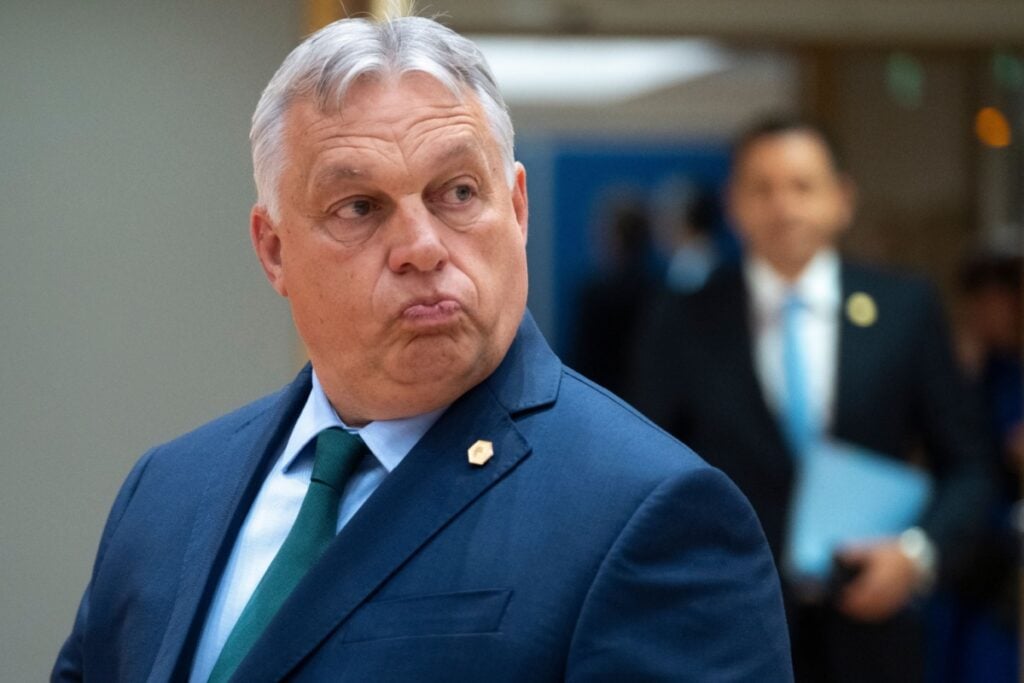
On Monday, Feb. 16, 2026, Marco Rubio met Viktor Orbán in Budapest, using the visit to publicly promote the Hungarian leader’s bid to remain in power after elections scheduled for April 12.
Orbán has led Hungary since 2010 and is seeking what would be a fifth straight term, after 16 years at the helm. Rubio linked the two governments’ current closeness to Orbán’s relationship with Donald Trump, telling reporters that the personal ties between the two leaders have strengthened bilateral cooperation.
Rubio’s language went beyond a routine diplomatic show of support. In comments delivered alongside Orbán, he said the U.S. president was “deeply committed” to Orbán’s political success, framing it as aligned with U.S. interests.
Civil Nuclear Agreement Highlights Energy Cooperation
The trip also produced a formal energy deliverable: Rubio signed a U.S.-Hungary civilian nuclear cooperation agreement during his Budapest stop. The pact covers potential purchases of small modular reactors (SMRs) and includes cooperation on U.S.-supplied nuclear fuel and spent-fuel storage technology, according to reporting on the visit.
Hungary has long argued that lowering household energy costs and improving security of supply require a broad mix of sources. The nuclear framework provides a new channel for U.S. firms and technology to play a larger role, while placing the relationship’s energy component at the center of a trip that also carried explicit election-season messaging.
In separate coverage of the Budapest meetings, European outlets described the visit as an unusually direct signal of U.S. political backing for Orbán ahead of the April vote, at a time when surveys have suggested his party faces a more competitive race than in prior elections. (Financial Times)
Russia, Ukraine, And A Sanctions Exemption In The Background
The Budapest stop unfolded against sharp differences between Hungary and many of its European partners over Ukraine and Russia-related energy policy. Orbán is widely viewed in the European Union as one of Vladimir Putin’s most reliable advocates inside the bloc, and he has continued to favor Russian energy purchases despite broader efforts to reduce dependence on Moscow.
Moreover, Hungary received an exemption from U.S. sanctions on Russian energy following a November White House meeting between Trump and Orbán. Rubio did not say how long that exemption would remain in place, as the EU aims to phase out Russian fossil fuels by the end of 2027.
Orbán told Rubio that Hungary would be prepared to host any future trilateral peace summit involving the United States, Russia, and Ukraine, and said Trump had an “open invitation” to visit Budapest. He also claimed that Volodymyr Zelenskyy and Ukraine were trying to influence Hungary’s election environment by criticizing his stance against weapons or financial support for Kyiv and by pointing to Hungary’s threats to block Ukraine’s eventual EU membership.
Campaign Backdrop And Orbán’s Conservative Brand
Rubio’s Central Europe swing came after attending the Munich Security Conference and a stop in Slovakia, with both countries as friendly terrain for Rubio among Eurosceptic leaders who oppose supporting Ukraine and openly back Trump.
Orbán has cultivated a profile that resonates with parts of the U.S. conservative movement, including hardline anti-immigration policies and a political style that mirrors Trump-era slogans. Sources like the Associated Press noted Orbán’s use of the phrase “Make Europe Great Again” and described how Hungary has hosted repeated editions of the Conservative Political Action Conference, with this year’s event moved to March, shortly before the election.
The same report also pointed to domestic controversies that have kept Hungary under criticism from rights groups and European institutions, including a government ban on the Budapest Pride celebration and authorization for facial recognition to identify participants, as well as restrictions affecting same-sex adoption, same-sex marriage, and legal recognition for transgender people.
