


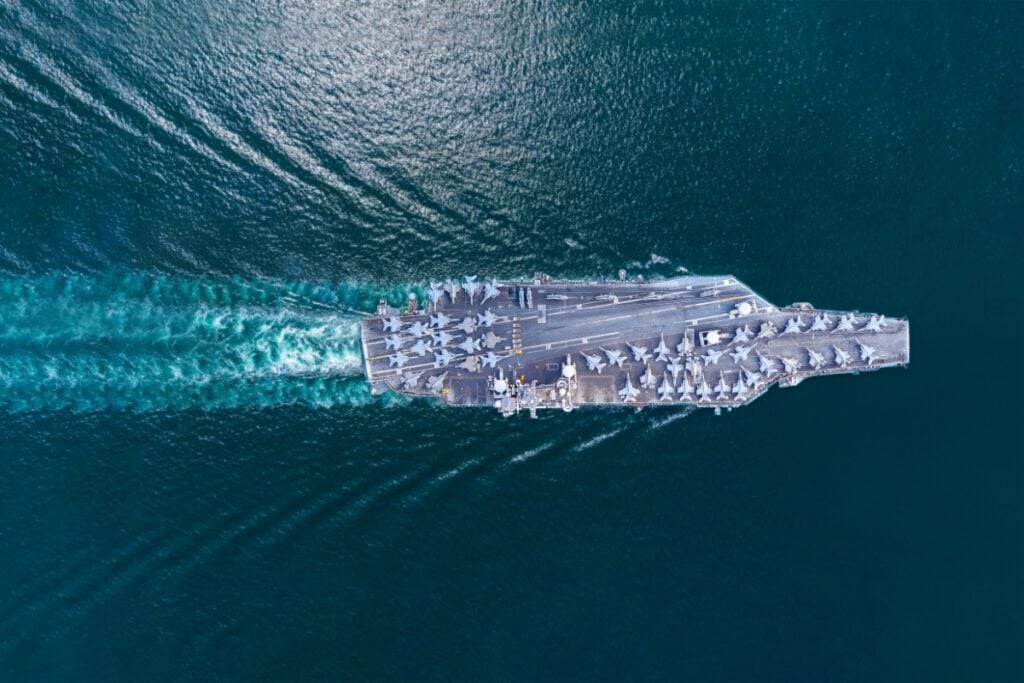
Submarine Strike And Intensified Air Campaign
A U.S. submarine sank an Iranian warship in the Indian Ocean, a dramatic escalation as Washington and Israel expanded their strikes against Iranian security forces and other state institutions on the fifth day of open conflict. U.S. Defense Secretary Pete Hegseth said a torpedo hit the vessel in international waters late Tuesday.
Sri Lankan authorities reported that 32 people were rescued from the ship, which they said had 180 people aboard and went down outside Sri Lanka’s territorial waters. Sri Lanka’s navy said it recovered 87 bodies from the sea, underscoring the human cost as fighting spreads well beyond the immediate Israel-Iran theater.
Israel described its latest strikes as focused on internal levers of control, saying it hit buildings tied to the Basij, the volunteer arm associated with Iran’s paramilitary Revolutionary Guard, as well as facilities linked to Iran’s internal security command. Israeli strikes also continued in and around Lebanon, including areas near Beirut, amid cross-border fire involving the Iranian-backed militant group Hezbollah.
Regional Retaliation And Rising Casualties
Iran responded with attacks across the region, with strikes or attempted strikes reported toward Israel and into parts of the Gulf. Sirens sounded in Bahrain, home to the U.S. Navy’s 5th Fleet, as regional governments and militaries braced for wider spillover.
Turkey said NATO defenses intercepted a ballistic missile launched from Iran before it entered Turkish airspace, highlighting the risk that escalation could pull in additional states even absent direct intent. Meanwhile, Israel reported renewed incoming fire, including missiles launched from Iran and rockets fired by Hezbollah.
Officials in the affected countries have issued fresh casualty estimates. Iran’s Foundation of Martyrs and Veterans Affairs said at least 1,045 people had been killed inside Iran as of Wednesday. Israeli authorities reported 11 deaths. Lebanon’s Health Ministry said more than 50 people had been killed there, and the AP report said six U.S. troops had died.
The pace of strikes has been so intense that Iranian state television announced a postponement of mourning ceremonies for Iran’s Supreme Leader Ayatollah Ali Khamenei, who was killed in the conflict. The delay reflected both security concerns and the logistical strain of sustained bombardment and disruption.
Oil Routes Disrupted As Markets React
Energy infrastructure and maritime chokepoints have moved to the center of risk calculations. Iran’s Revolutionary Guard issued what the AP described as its most intense warning yet, threatening the “complete destruction” of the region’s military and economic infrastructure if strikes continue.
On Wednesday afternoon, a container ship was attacked while transiting the Strait of Hormuz, according to the United Kingdom Maritime Trade Operations, which said the vessel was hit by an unknown projectile. The Strait is a narrow passage at the mouth of the Persian Gulf through which roughly one-fifth of the world’s oil is shipped, making any sustained disruption a direct threat to global supply.
Shipping activity has already fallen sharply. MarineTraffic.com said tanker traffic through the Strait of Hormuz was down by around 90% compared with prewar levels. Oil prices surged as attacks and uncertainty snarled transit, while global stock markets fell on fears that higher energy costs could slow economic growth and intensify inflation pressures in importing countries.
The conflict has also disrupted travel across the region, with the AP reporting that hundreds of thousands of travelers have been stranded amid the security situation and operational constraints affecting flights and cross-border movement.
Succession Pressure Inside Iran And Unclear Endgame
Even as military operations accelerate, Iran’s leadership is confronting an internal transition under fire. Clerical and political leaders are moving to select a new supreme leader, only the second such succession since the 1979 Islamic Revolution, according to the AP report. Potential candidates span hard-liners who favor confrontation and reformists who have argued for diplomacy.
Among the names long discussed is Mojtaba Khamenei, the late leader’s son, who has been viewed as a possible contender despite never having held an elected or formally appointed government post, the report said. Iran’s judiciary chief warned that anyone seen “cooperating with the enemy” would be treated as an enemy, language suggesting the state may tighten internal controls as it faces the most severe crisis in decades.
U.S. officials signaled that the campaign’s duration remains uncertain. Hegseth declined to set a firm timeline and indicated it could extend for weeks, while the top U.S. commander in the Middle East, Adm. Brad Cooper, said, “We’ve just begun,” according to the AP report. The combined messaging points to a sustained effort to degrade Iran’s air defenses and missile capabilities even as Iran continues to launch attacks across the region.
