


Venezuela’s opposition has long anticipated a simple sequence: Nicolás Maduro falls, and a new leadership replaces his government. The first part appeared to occur when U.S. forces seized Maduro and first lady Cilia Flores during a military operation on a base in Caracas and flew them to the United States. U.S. authorities say Maduro is jailed in New York on drug trafficking charges.
The second part has not been followed. President Donald Trump said the United States would “run” Venezuela and then accepted a transition led by Delcy Rodríguez, the vice president in Maduro’s administration. With many opposition leaders already in exile or prison, the shift left the governing party’s senior ranks largely intact. Analyst David Smilde of Tulane University said U.S. officials appeared skeptical that removing Maduro would automatically lead to a rapid democratic transition.
Opposition Points to the Disputed 2024 Election
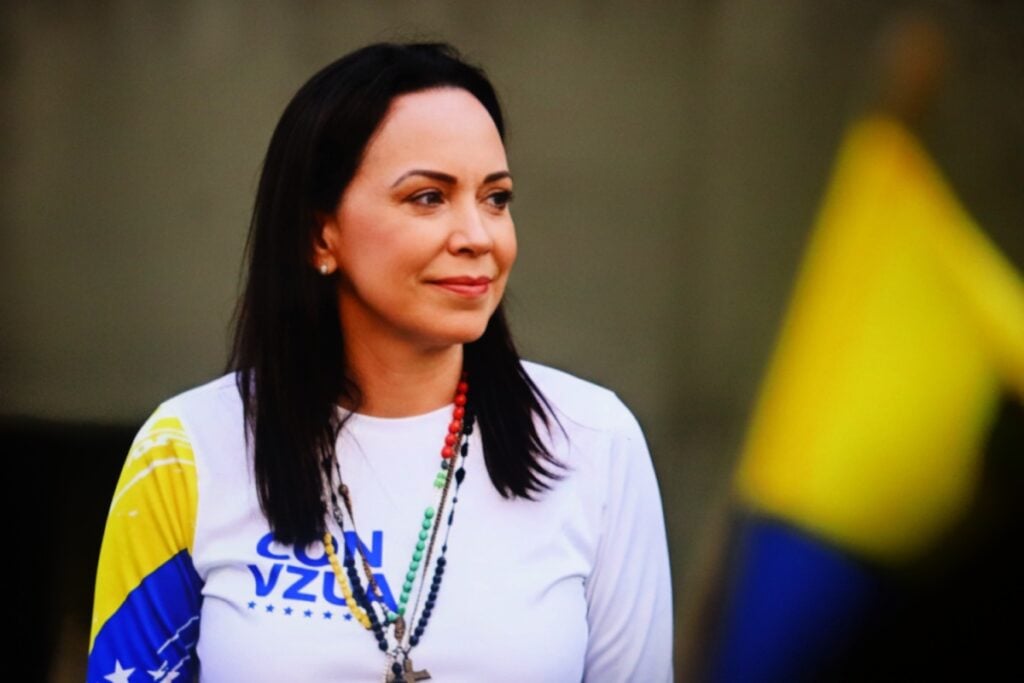
The opposition’s legitimacy claim centers on the contested 2024 presidential election. María Corina Machado became Maduro’s most prominent challenger, but authorities barred her from running. She backed retired ambassador Edmundo González Urrutia as a substitute candidate on the ballot.
Officials aligned with the ruling party declared Maduro the winner hours after polls closed. Opposition organizers later released tally sheets, which they said showed González Urrutia defeated Maduro by roughly a 2-to-1 margin. The United States and other governments recognized González Urrutia as the legitimate winner, while many Venezuelans continued to associate the campaign’s momentum with Machado, who remained the movement’s most visible voice.
After Maduro’s capture, Trump publicly rejected Machado as a potential leader, saying she lacked “the support” and “the respect” inside Venezuela. In her first televised interview since the seizure, Machado praised Trump and did not directly address his dismissal of her movement. She said she last spoke to him on Oct. 10, the day her prize was announced, and described the U.S. action as “historic” and a “huge step” toward a transition.
The comments were striking, given Machado’s repeated praise of Trump, including dedicating her Nobel Peace Prize to him. The AP report noted that her embrace of some hard-line U.S. policies — including deportation efforts and aggressive anti-trafficking rhetoric — has cost her support at home.
Court Ruling Blunts the 30-Day Election Requirement
Venezuela’s constitution requires a new election within 30 days when a president becomes “permanently unavailable,” including death, resignation, removal from office, or abandonment of duties declared by the National Assembly. That timeline was followed after Hugo Chávez died in 2013.
In this crisis, the Supreme Court, dominated by Maduro loyalists, declared the president’s absence “temporary,” removing any immediate election obligation. Under that interpretation, Rodríguez can govern for up to 90 days, with a provision to extend to six months if approved by the ruling-party-controlled National Assembly. The court did not address a separate 180-day limit referenced elsewhere, fueling questions about how long the interim period could last.
In Washington, Secretary of State Marco Rubio stated that the United States would rely on economic leverage, particularly through the oil sector, and he later briefed Congress alongside Defense Secretary Pete Hegseth as lawmakers sought clarity on next steps. Venezuela holds the world’s largest proven crude oil reserves, a fact that has been a prominent feature in U.S. discussions of pressure and reconstruction.
Exile and Uncertainty Shadow Any Transition
Even if elections are scheduled, opposition leaders would need a path back into Venezuela. González Urrutia has been in exile in Spain since September 2024. Machado left Venezuela after appearing publicly for the first time in 11 months to receive her Nobel award in Norway, and other opposition figures remain in prison or abroad.
Machado has denounced Rodríguez as “one of the main architects of torture, persecution, corruption, narco-trafficking,” arguing she cannot be trusted by international investors. U.S. Sen. Lindsey Graham, a close Trump ally, said he believes an election will happen but did not say when, adding, “We’re going to build the country up … crescendoing with an election that will be free.”
Researcher Ronal Rodríguez of the Venezuela Observatory at Universidad del Rosario warned that sidelining the opposition after 2024 could undermine the nation’s “democratic spirit,” saying that disregarding the vote would “belittle, almost … humiliate, Venezuelans.”
