


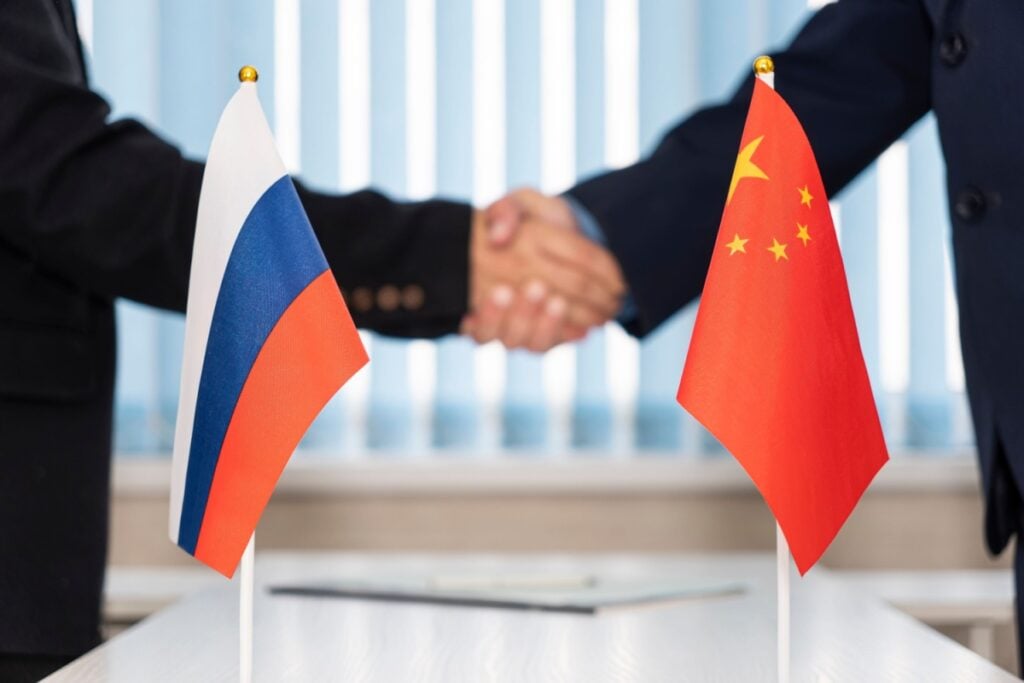
Russia’s Vladimir Putin and China’s Xi Jinping held a video call on February 4, 2026, using the exchange to underline the breadth of their political and economic coordination while also addressing ties with the United States. The Kremlin said the conversation lasted 1 hour and 25 minutes.
In opening remarks broadcast on Russian state television, Putin said the foreign-policy link between Moscow and Beijing remained a “major stabilizing factor” amid what he described as growing global turbulence, and he reiterated support for shared priorities including sovereignty, security, and each country’s chosen development path.
Chinese state media reported that Xi said the leaders would review plans for bilateral ties and exchange views on major strategic issues. Referencing the first day of spring on the Chinese calendar, he said he wanted to work on a “new blueprint” for relations on a day that symbolizes new beginnings.
Cooperation Agenda Spans Energy, High-Tech, and Mobility
Both sides emphasized practical cooperation, with energy again presented as a central pillar of the relationship. Putin highlighted what he called strategic energy ties and pointed to cooperation in the peaceful use of nuclear energy, as well as high-technology projects in industry and space research.
Putin also praised China’s decision to allow visa-free entry for Russian citizens, saying Moscow had reciprocated the move. Chinese media, in turn, said Xi described trade and economic exchanges as advancing steadily and urged continued high-level engagement and pragmatic cooperation.
The call followed recent senior-level contacts, including a trip to Beijing by Sergei Shoigu and talks there with Wang Yi, according to state media accounts cited by AP and Reuters.
As a broader context, Reuters noted that the two countries declared a “no-limits” strategic partnership shortly before Russia’s February 2022 invasion of Ukraine, and that China has since expanded trade with Russia as Western sanctions tightened.
U.S. Relations, Travel Plans, and Global Flashpoints
After the call, Kremlin foreign affairs adviser Yuri Ushakov said Moscow and Beijing “support each other” on key national-interest issues and that their assessments of relations with the United States “practically coincide.” He added that Xi invited Putin to visit China in the first half of 2026, and that Putin accepted the invitation.
Ushakov also said Putin would attend the Asia-Pacific Economic Cooperation summit that China is set to host in Shenzhen in November.
AP described the call as occurring amid renewed diplomatic activity with China, with Western leaders seeking to strengthen ties despite ongoing disputes over the war in Ukraine. The report also pointed to shifting dynamics among U.S. partners amid clashes with Donald Trump over tariffs and other issues.
The discussion also touched on Trump’s newly announced Board of Peace, according to AP. China’s Foreign Ministry spokesperson Guo Jiakun said Beijing would uphold the international system with the United Nations at its core, regardless of changes in the international landscape.
Ukraine Negotiations and the New START Deadline
Ushakov said Xi supported talks involving Russian, Ukrainian, and U.S. negotiators in Abu Dhabi, with a second round beginning on Wednesday, AP reported.
The call also came as the New START nuclear arms treaty between Russia and the United States was nearing its expiration, with Reuters and AP noting heightened attention to arms-control and strategic-stability issues. AP reported that Putin said Washington had not responded to his proposal for a one-year extension, while Ushakov said Russia would remain open to negotiations to maintain strategic stability.
In the same briefing, AP reported that Putin had previously said Russia would consider joining Trump’s Board of Peace and had suggested setting aside 1 billion from Russian assets frozen in the United States to support reconstruction in Gaza.
